Involving older adults in designing the technology intended for them is essential in all settings, including in affordable housing, and the LeadingAge Center for Aging Services Technologies (CAST) is helping to innovate in this space.
Scott Code, CAST vice president, served on the advisory research council for Residents First: Technology for Connection and Healthy Living in Affordable Senior Housing, a recent study commissioned by Volunteers of America (VOA). This LeadingAge member in Florida, Minnesota, Texas, and other states serves older adults in affordable housing communities at hundreds of locations nationwide. Study findings, which will guide technology development at a new VOA affordable housing community in the nation’s capital and other locations, are applicable to all LeadingAge members.
A key insight from the VOA study—that while technology has become a social determinant critical to aging well, technologies must be designed with residents rather than for them in order to yield benefits—echoes sentiments voiced by CAST members and other researchers. User-informed design is essential. Explains Code: “We saw clearly that when residents are involved from the start, the technology chosen is more trusted and far more likely to be used. Centering older adults’ lived experience is the foundation for building solutions that support safety, connection, and everyday life in affordable senior housing.”
Technology Benefits and Barriers
The VOA commissioned Residents First: Technology for Connection and Healthy Living in Affordable Senior Housing, and Humana Foundation support made the study possible. The Institute for Public Health Innovation (IPHI) conducted the research and wrote the report.
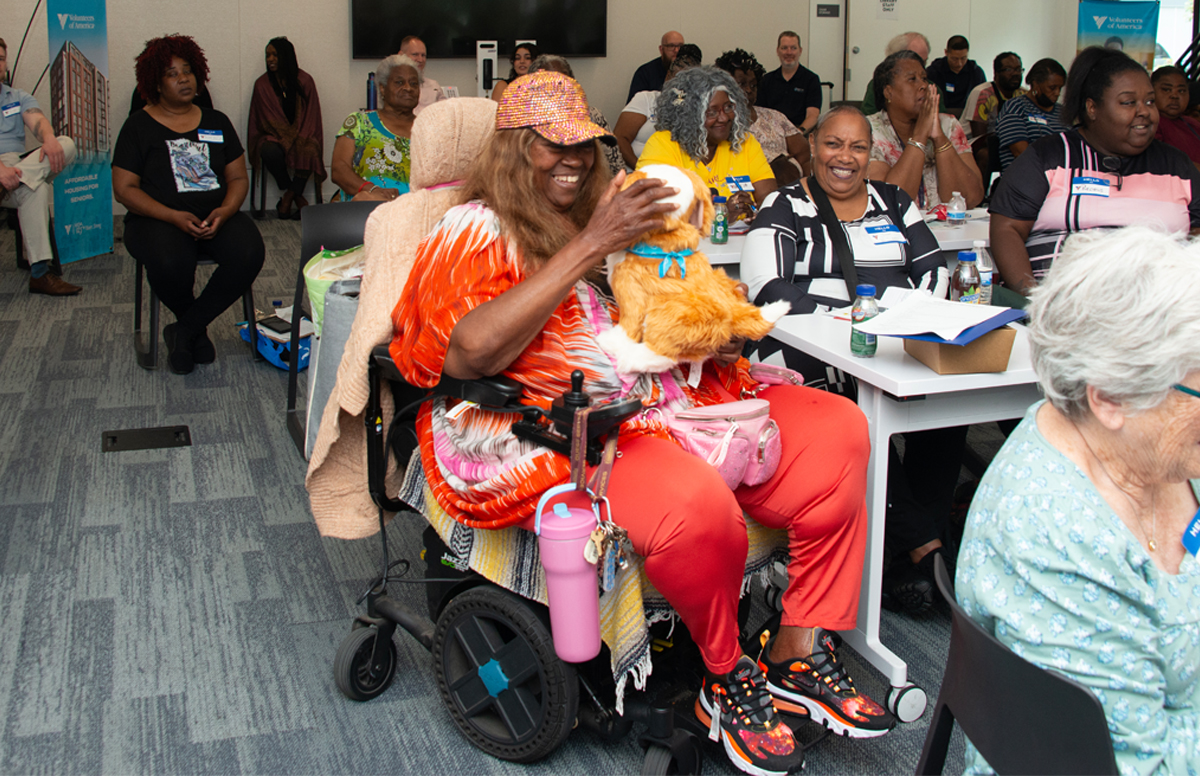
The research methods also prioritized the involvement of older adults. A literature review of more than 50 published and grey sources (that is, literature produced by individuals or organizations outside of commercial and/or academic publishers) yielded five technology categories. Older adults were invited to use photography and narration to share ways their daily lives related to the five categories. Two focus groups listened to residents of affordable senior housing (some resident participants, pictured, at right), and one queried resident coordinators from existing VOA older adult communities. Lastly, potential residents interacted directly with a range of technologies at a facilitated, low-pressure showcase, and health care stakeholders gave interviews.
The results highlighted five areas as essential to older adults’ quality of life, with technology support beneficial in each:
- Connection and engagement
- Safety and security
- Health and wellness
- Lifelong learning
- Caregiver support
However, older adults also identified barriers to using these technologies. Challenges included digital literacy and confidence gaps, especially in navigating apps, telehealth, and security features; privacy and data use concerns; cost and connectivity barriers; and design limitations that fail to reflect age-related physical changes.
Key Recommendations
The report’s recommendations highlight the need to involve residents and earn their trust:
- Adopt a five-pillar framework to guide decisions across connection, safety, health, learning, and caregiver needs.
- Include baseline technology assets for all residents, treating it as essential housing infrastructure.
- Engage residents early and often through ongoing listening that captures evolving wants, needs, and capacities.
- Equip resident support staff with smart tools that make technology usable for residents.
- Design for accessibility and inclusion from the start, ensuring that all technologies account for diverse abilities and personal choice.
- Invest in the people and support systems that make technology work, including training, tech support, and trusted relationships.
The study authors also included specific guidance for several groups, including the following:
- Housing funders, developers, and operators: Treat broadband and accessible design as core infrastructure and as essential as plumbing or electricity, and align technology decisions with the five quality of life pillars the study identified.
- AgeTech entrepreneurs: Co-design, test, and refine innovations in diverse housing environments with real users, and support innovations with hands-on training.
- Health practitioners and organizations: Collaborate with housing providers to extend preventive care into daily life, supporting medication adherence, fall detection, and mental well-being before crises occur.
For more on this groundbreaking study, read the full report.
Photo: courtesy Volunteers of America

 TEP Report Hints At Home Health Value Based Purchasing Potential Changes