A Digital Literacy Deep Dive
As panel moderator at Net Inclusion 2026 last month, I had the unique opportunity to learn about various approaches being taken to bring person-centered technology support to older adults. Throughout my time at the Center for Aging Services Technologies (CAST), and even prior, in my previous job starting as a technology specialist at Selfhelp Community Services, a LeadingAge CAST Patron, I’ve kept an eye on one panel participant in particular: LeadingAge Corporate Partner OATS, Older Adults Technology Services from AARP, and its flagship program Senior Planet, which operates as a national platform and partner network.
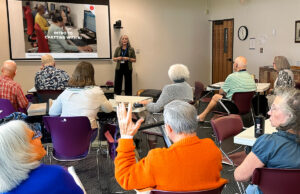
Many LeadingAge members, including Eaton Senior Communities and Friends Village, as well as some of our state partner associations, engage with the latter, particularly since the COVID-19 pandemic. I wanted to learn more—not only the how, but the why. It’s particularly relevant now, as I regularly hear from LeadingAge members—both those who are fully engaged with CAST and those who are less so—concerns about and interest in helping older adults develop and maintain digital literacy.
So, I got on the line with Jeff Rose, director of special initiatives at OATS. Below is our condensed conversation.
Scott: It’s great to chat, Jeff! Last month, at Net Inclusion 2026 in Chicago, your colleague Lori Kristofka shared the basics of OATS and Senior Planet and mentioned that the COVID-19 pandemic provided the impetus for innovation. It was during those years, when older adults relied heavily on tech for connection to loved ones and access to vital information, which led to the creation of free virtual classes, a national tech support hotline, and a wide range of online resources that communities can plug into immediately. Within LeadingAge and CAST, the pandemic certainly motivated us to try new approaches and develop new products. We released our Resident/Client Technology Guide in 2021, in response to seeing many providers struggle to provide the tech support residents need. In the past five years, so much has changed! What is top of mind for you and Senior Planet now?
Jeff: Cannot agree more about change! That’s for sure. More than ever, for all of us, not just older adults, digital literacy is so critical; it is tied to our health, our financial security, and social connectedness. Now, for older adults—Senior Planet’s primary users—digital literacy can be particularly powerful, as you and your members know. And because the role of artificial intelligence, or AI, in tech users’ everyday experience is increasingly prominent, our work on digital literacy also incorporates AI literacy.
Scott: What does that mean, in practical terms. How, for instance, do you address that in your offerings and educate your users?
Jeff: We’re approaching AI literacy the same way we approach teaching digital skills. We incorporate practical use cases for older adults, such as travel planning or making to-do lists using an AI assistant, in clear language. We also focus on the real-life benefits. Maybe your partner’s eyesight isn’t so great now; AI programs can turn written sentences into audio scripts. Our goal is to help older adults understand what AI can do so they feel confident rather than intimidated. At the same time, we want them to be fully aware of potential risks and threats associated with AI. We help them understand AI’s role in scams like deepfakes and more.
Scott: There’s certainly a lot to explore. Where do you think the need for caution in the use of AI is especially critical, either for organizations or for older adults?
Jeff: Organizations need to be cautious about overreliance on AI for essential services. It’s important to ensure that human support remains available. Romance and crypto currency hoaxes are, of course, commonplace. New threats are emerging so rapidly; scams that use AI‑generated voices or create highly personalized phishing messages are increasingly common. It’s just humbling. Among some people, we’re seeing a reversion, a retreat to analog. People creating an “offline” family password, for example, that can help in some of those situations.
Scott: As you know, LeadingAge members are providers. What are the most effective ways organizations can help older adults build confidence and protect themselves online?
Jeff: The most effective approach combines education with hands‑on practice. Teaching users simple protective habits is really the foundation. Providers can work with OATS or other organizations to provide educational resources about how to properly use technology. Our Senior Planet licensing program works with almost 250 organizations across the country. Signing up gives organizations access to a curriculum with a wide range of educational materials. For more details, join an informational session at oats.org/licensing.
Scott: Several years ago, when we released our Resident/Client Technology Guide, we recommended that providers opt for a “value-added technology training and support tailored for residents’ and clients’ needs.” Do you agree? What do you think aging services providers often underestimate when it comes to digital literacy and ongoing tech support?
Jeff: Absolutely. There is no one-size-fits-all approach. It’s important to understand your users and their concerns. We sometimes overlook the emotional side of digital literacy with things like anxiety, fear of breaking something, or embarrassment. Also, many providers underestimate how frequently older adults need ongoing support, not just one‑time training or a class. Technology changes quickly. It’s even hard for staff members to keep up.
Scott: I hear both of those sentiments from our members. Partnerships with local organizations can be really helpful to ensure an organization can keep pace! What does a successful partnership between an aging services provider and an organization like OATS look like?
Jeff: Strong collaborations for us blend OATS’ digital literacy expertise with the provider’s deep understanding of their community. That means sharing information on participant needs and creating a welcoming environment where older adults feel supported. Successful collaborations also include training staff, sharing resources, and aligning digital engagement with broader organizational goals.
Scott: Let’s end on a positive note. What excites you about AI’s potential to support older adults, or organizations that serve them, like our members?
Jeff: Well, I’ll start with my point of view about the users. Older adults are fully capable of learning and using new technologies when the environment is supportive and the training is relevant to their lives. Second, as AI becomes more embedded in our daily lives, we can use it not to replace relationships, but rather, to enhance independence. AI that’s embedded into move wear, for instance, helps wearers continue to walk or hike without assistive devices.

Most Recommended
October 15, 2025
 Shutdown Week Three: Impact of Ongoing Closure on Affordable Housing
March 06, 2026
Fiscal Year (FY) Funding 2026
October 07, 2025
Immigrant Workforce Matching Program Brings Workforce Relief
Recently Added

March 30, 2026
House Minimum Staffing Standards Bill Introduced

March 27, 2026
Analysis: OIG Report On Nursing Homes' Antipsychotic Usage

March 27, 2026