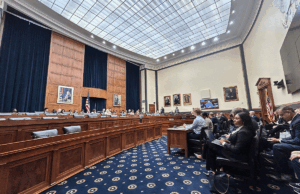
On August 4, 2026, Senator Ron Johnson (R-WI) held his first hearing as the new chair of the Senate Budget Committee, a position he took on after the passing of Senator Lindsay Graham (R-SC). While the Budget Committee does not have jurisdiction over the Medicaid program, LeadingAge is very interested in its discussion of Medicaid because this Committee is in a position to direct cuts to the Medicaid program through a budget reconciliation process, as occurred in 2025 when HR 1 cut federal Medicaid funding to states by about $911 billion over the next 10 years.
During the hearing, “Medicaid: The Reality,” the Committee heard testimony from three witnesses: Brian Blase, Paragon Health Institute, Jonathan Ingram, Foundation for Government Accountability, and Andy Schneider, Center for Children and Families McCourt School of Public Policy at Georgetown University. Mr. Blase and Mr. Ingram both discussed Medicaid’s federal fiscal matching policy, with particular attention to the enhanced federal match for expenses incurred by states for Medicaid expansion enrollees. Both witnesses focused on the need for reforms to shift what they described as current financial “incentives” for states so as to better align Medicaid payment policy with a focus on the ideals and populations Medicaid was originally designed for – older adults, people with disabilities, children, and moms. Mr. Schneider focused on the loss of healthcare coverage as policies from HR 1 are implemented and the impact of rural healthcare provider closures.
Chair Johnson urged a fact-based approach to understand what he described as “out of control Medicaid spending growth.” Though remaining moderately civil, the two parties clashed over messaging. Democrats focused on the administration’s firing of Inspectors General and pardoning of convicted fraudsters, while Republicans attacked state credibility in administration of state eligibility categorization and fraud control efforts. Early in the hearing, Senators John Kennedy (R-LA) and Bernie Moreno (R-OH) questioned Mr. Schneider over their assumptions that states improperly drive up Medicaid enrollment through the expansion pathway to cheat the federal government out of funding. The narrative continued as Mr. Blase described Medicaid financing in a way that implied it generates revenues for states through federal matching dollars, instead of the federal government sharing with states in the total cost of eligible services.
We will continue to monitor congressional interest in Medicaid financing and program integrity. The full hearing can be watched here.


 TEP Report Hints At Home Health Value Based Purchasing Potential Changes