Despite the potential benefits that artificial intelligence (AI) brings to aging services, AI is also being used to perpetuate fraud against older adults. Now, members of the Senate Special Committee on Aging are seeking solutions to these emerging threats.
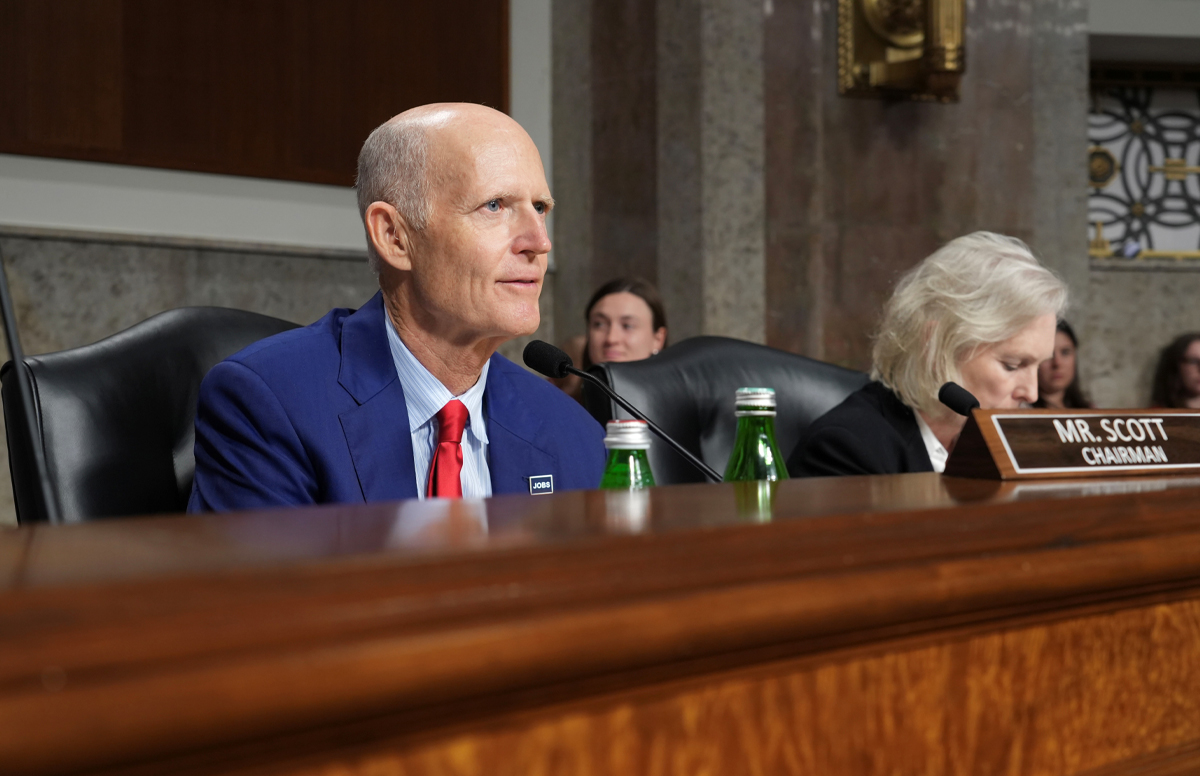
Senate Committee on Aging Chairman Rick Scott (R-FL) and Ranking Member Kirsten Gillibrand (D-NY), pictured at right, led the July 29, 2026 hearing, “The AI Deception Machine: Deepfakes, Chatbots, and the New Frontier of Senior Fraud,” featuring testimony and recommendations from fraud victims and experts. Scott and Gillibrand’s report, Artificial Intelligence & Older Americans: Confronting New Threats, Unlocking New Opportunities, released that same day, notes that as AI comes to the forefront, Congress must ensure AI brings benefits to at-risk populations like older adults and safeguards against fraud.
Committee Hearing
At the committee hearing, three expert witnesses testified, sharing perspectives from banking, consumer protection, and privacy and cybersecurity. In addition, two victims of AI-generated fraud shared their experiences. Committee members and witnesses recommended a host of potential solutions to consider, including the following:
- Prioritize Education and Awareness. Empower older adults to identify deepfake dupes, and deliver education through trusted community channels. Coordinate agencies around education, as awareness efforts are currently fragmented. Offer courses for older adults that include information about how they can protect themselves from AI, not just how to use it.
- Improve Coordination and Enforcement. Develop a national strategy that directs agency coordination with an all-of-government response, as well as assigns accountability and aligns incentives to address fraud. Promote greater coordination across federal and state agencies and industry, plus knowledge sharing among policymakers, law enforcement, and industry. Coordinate enforcement, bringing consequences to platforms that support fraud. As these frauds often stem from international conspiracies, establish international cooperation and facilitate connections to local law enforcement. Address cuts to federal agencies that handle enforcement and victim assistance.
- Restore Trust in Social Media and Telecommunications. Prevent social media platforms from posting deepfakes, and assist Americans in knowing which faces and pieces of information are real vs. AI generated. Require phone companies to disclose where a call is coming from to help consumers identify AI voice clones. Require companies to be transparent about when consumers are interacting with AI and when they are conversing with a human.
- Use AI to Prevent Fraud. Invest in AI technology to identify and stop deepfakes before they reach consumers, just as spam filters currently work in the background to protect email inboxes.
- Interrupt Fraud in Action. Consider processes that implement interventions at banks as people withdraw or transfer large amounts. Establish a faster way to take down fraudulent ads.
- Centralize Reporting. Develop a centralized reporting portal that might facilitate people coming forward; currently there are multiple places to report scams and there is no coordination among them.
Additional Committee Members’ Efforts to Address AI Fraud
Some of the recommendations discussed at the hearing are already being pursued, including the National Strategy for Combating Scams Act of 2025 introduced by committee members Sens. Gillibrand and Scott, Sen. Mark Kelly (D-AZ), and Sen. Ashley Moody (R-FL) in December 2025.
On July 23, 2026, Sen. Kelly and committee member Sen. Jim Justice (R-WV) introduced the Senior Chatbot Protection Act to keep older Americans safe by requiring AI chatbot and voice assistant companies to disclose when consumers are interacting with AI, safeguard sensitive conversations, and end deceptive design practices in their products.
In addition, Sen. Scott and Sen. Maggie Hassan (D-NH) introduced bipartisan legislation on June 16, 2026, to create ReportScams.gov—the first centralized online hub for Americans to report scams and get assistance after being targeted by fraudsters, as fraud reports now happen across 13 different agencies.
In another fraud prevention effort, Sens. Gillibrand and Kelly sent a letter to the CEOs of nine top AI companies on the hearing date asking how they are protecting seniors who use AI chatbot companions.


 Long Term Care Financing RFI Released by Senate Finance Committee