Multi-Sensory Experiences To-Go: Front Porch Developing Mobile Connections Hubs
An ocean landscape, with distant whale sightings and the soothing sound of waves, even the scent of ocean breezes; a fishing expedition from the fisherman’s point of view, featuring nature-filled vistas of open water and blue skies—these are two examples of engaging sensory experiences that may be part of the new Mobile Connections Hubs, currently being designed by a technology team at Front Porch Center for Innovation and Wellbeing (FPCIW), part of Front Porch in Glendale, CA.
This new portable project, based on the Snoezelen, or sensory room, concept created in the Netherlands in the 1970s, offers older adults a multi-sensory experience developed from evidence-based best practices, with the goal of soothing, regulating, or stimulating senses.
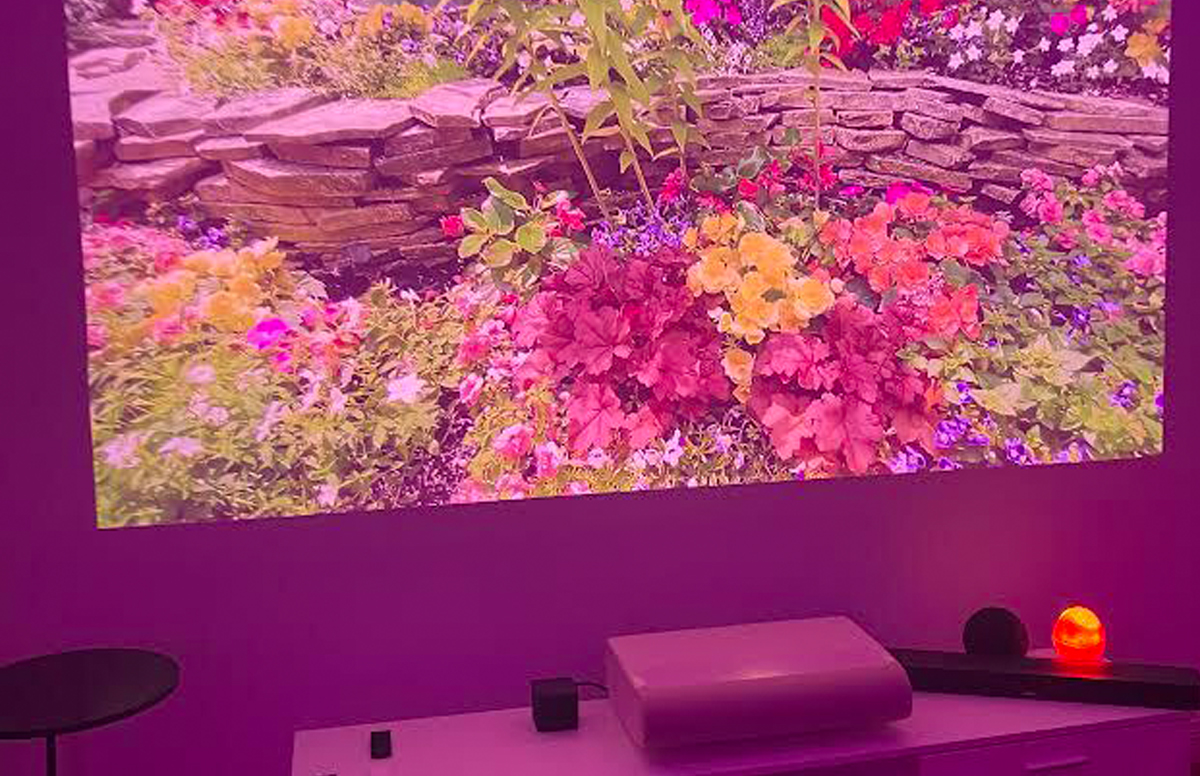
The tools employed to create a sensory room, as shown at right, are similar to those found in a smart home: smart lighting, curated soundscapes, aromatherapy, immersive video, and tactile comfort items. All of these components together, in an experience that lasts only a few minutes, can result in pronounced changes in an individual’s mood and behavior, explains Davis Park, FPCIW’s vice president of transformation, who is leading the Mobile Connections Hub effort.
Front Porch sensory room exploration began in 2018, with the creation of a pilot at one of the community’s memory care neighborhoods. “There were huge amounts of change, within five minutes, for the users,” including a 52% reduction in anxiety, Park said. Data gathered from those experiences revealed the users’ feeling of calm increased by 54%, they were 29% more likely to talk/interact with others, their “general bright effect,” as he calls it, rose by 18%, and 73% of total residents reported feelings of “happiness” immediately following the sensory intervention.
“We knew we were onto something,” Park said. “We needed to share our learnings on this innovation—the impact of the effect [the sensory experience] produced positive changes with the individual, but also with their caregiver.”

However, Park said the finicky nature of the technology was a hurdle and without resources and the capacity to update the scenes and experiences, the sensory rooms would be hard to sustain. Additionally, available physical space in residences is at a premium, and updating technology, such as projectors and lights, could be cost-prohibitive.
Around the same time as the launch of the sensory room pilot, the idea for a Mobile Connections Hub emerged, with the goal of making the intervention more widely accessible. “With activity carts like those used at Front Porch, we could put together a portable, technology-enabled cart that could be brought to people’s homes,” Park said. The aim is to create a platform that’s very easy for caregivers to use. “It’s meant to be ‘plug and play,’ and as simple as asking a device like Alexa to ‘start the beach experience,’ for example,” he explained. A video would automatically pull up, and lighting and aromatherapy functions would be deployed. Participating together in the full sensory experience offers an individual and their caregiver the opportunity to engage with each other and create new moments, Park said.
FPCIW turned to the Consumer Technology Association (CTA) Foundation, which awards strategic partnership grants to 501(c)(3) nonprofits improving the lives of seniors and people with disabilities through assistive and emerging technologies. After submitting an application, Front Porch in June 2026 was awarded a grant for continued work on the Mobile Connections Hubs, which had stalled due to COVID.
“We have had a strong partnership with CTA, and with this grant, we want to scale our project, which is still in the prototype phase, and bring it to other senior living providers,” said Park. A grant-supported pilot program is scheduled to launch at the same memory care neighborhood that hosted FPCIW’s prior sensory room and at one of Front Porch’s affordable housing communities.
“We want to assess these experiences in independent living,” said Park. “There are residents who require home care services, and we want to see how this intervention can support them.”
There is also interest in exploring the Mobile Connections Hub as an intervention for people in hospice care, their families, and even chaplains, to help provide those essential moments of joy and connection, he added.
In developing the Mobile Connection Hubs, FPCIW is drawing on the expertise of many current and past collaboration partners such as Joy for All, creator of robotic companion pets, and Zinnia, a video content platform that offers a library of experiences. Park also recognized the essential contributions and feedback shared by Front Porch’s community of caregivers. “They contribute immensely and are absolutely essential in helping us innovate,” he said.
While Park noted that it takes a fair amount of work and “grit” on the backend to develop the prototype of such a user-friendly platform, he believes that when the final version of the Mobile Connections Hub is complete in 2027 or 2028, “it will spark a lot of conversation and excitement.”
Most Recommended
Recently Added

November 10, 2026
 HUD Expected to Resolve Funding Delays by Mid-November

November 09, 2026