
Beyond Efficiencies: AI Can Help Leaders Explore Multiple Futures
While the future can feel full of uncertainty, complexity, and constant disruption, leaders still need practical ways to think about what may be coming next. Scenario planning, a strategic exercise in which leaders brainstorm, outline, and explore possible future events or situations to help them make better decisions in the present day, is one popular approach. LeadingAge has, in fact, over the years developed multiple strategic planning tools and resources to help executives and boards in advance planning endeavors.
Now, with the advent of artificial intelligence (AI), leaders have a slew of new devices at their fingertips. For aging services, a sector being shaped by many forces at once, from workforce shortages, demographic shifts, financial pressure, and changing consumer expectations to new technology, and new models of care and service delivery, there’s a real need for tools that can help manage and plan in a complex operational environment. Any one of these trends would be significant on its own. Together, they create a level of uncertainty that makes traditional planning more difficult. AI can help.
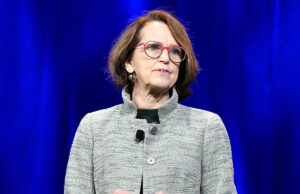
A recent Leadership Summit session, “Strategic Foresight: Tools for Seeking Clarity Amidst Chaos,” presented by Olivia Mastry, founder of Collection Action Lab, demonstrates how.

Using AI for Visioning
One of the most practical parts of Olivia’s session was a hands-on exercise using generative AI, such as ChatGPT, Microsoft Copilot, Google Gemini, or Claude. She provided example prompts that helped participants build different future scenarios.
That is where AI can be especially helpful. Instead of asking AI for a single prediction, participants used AI to explore multiple ways the future could unfold.
A leadership team, for example, could ask an AI tool to generate several possible scenarios for what aging services might look like in 2035. One scenario might focus on how the sector’s workforce will evolve to meet future needs. Another might imagine a future shaped by consumer technology and home-based care. A third might explore what happens if financing pressures, such as reduced Medicaid reimbursements, reshape the provider landscape.
AI’s value is its ability to create structured possibilities that jumpstart discussions about what will be needed in the future.
Once those scenarios are developed, leaders can begin asking better questions: Which scenario feels most plausible? Which would be most disruptive? What early signals would tell us this future is becoming more likely? What decisions should we make today to be better prepared?
That is an important lesson for aging services leaders. We often talk about AI in terms of productivity, efficiency, and automation. Those uses are real and important. But AI can also be used as a strategic thinking partner. It can help teams move beyond a blank page, generate scenarios, surface new questions, and test assumptions.
AI Helps Teams Take the First Step
During the session’s hands-on portion, participants quickly saw that better AI prompts produced better responses. When they gave AI more context, such as the type of organization they represented, the population they served, their current challenges, or the strategic question they were trying to explore, the responses became more relevant.
Of course, AI-generated responses still need to be reviewed carefully. Leaders need to validate information, question assumptions, and apply their own knowledge of their organization, staff, residents, clients, and community. AI can expand thinking, but it cannot replace judgment.
The broader takeaway is that AI can make strategic foresight more accessible. Many organizations may not feel they have the time or resources to engage in formal foresight work. Leaders need time and tools to look ahead, think differently, and prepare for more than one possible future. AI can help teams to take the first step and explore uncertainty, imagine different futures, and identify the decisions that may matter most.

Most Recommended
Recently Added

October 14, 2026
CAST Members in the News

October 14, 2026
Colleagues on the Move, October 14, 2026

October 13, 2026
 Direct CARE Opportunity Act of 2026 Introduced in House
October 13, 2026