
LeadingAge Congressional Briefing Pushes for BABA Exemptions for Affordable Housing
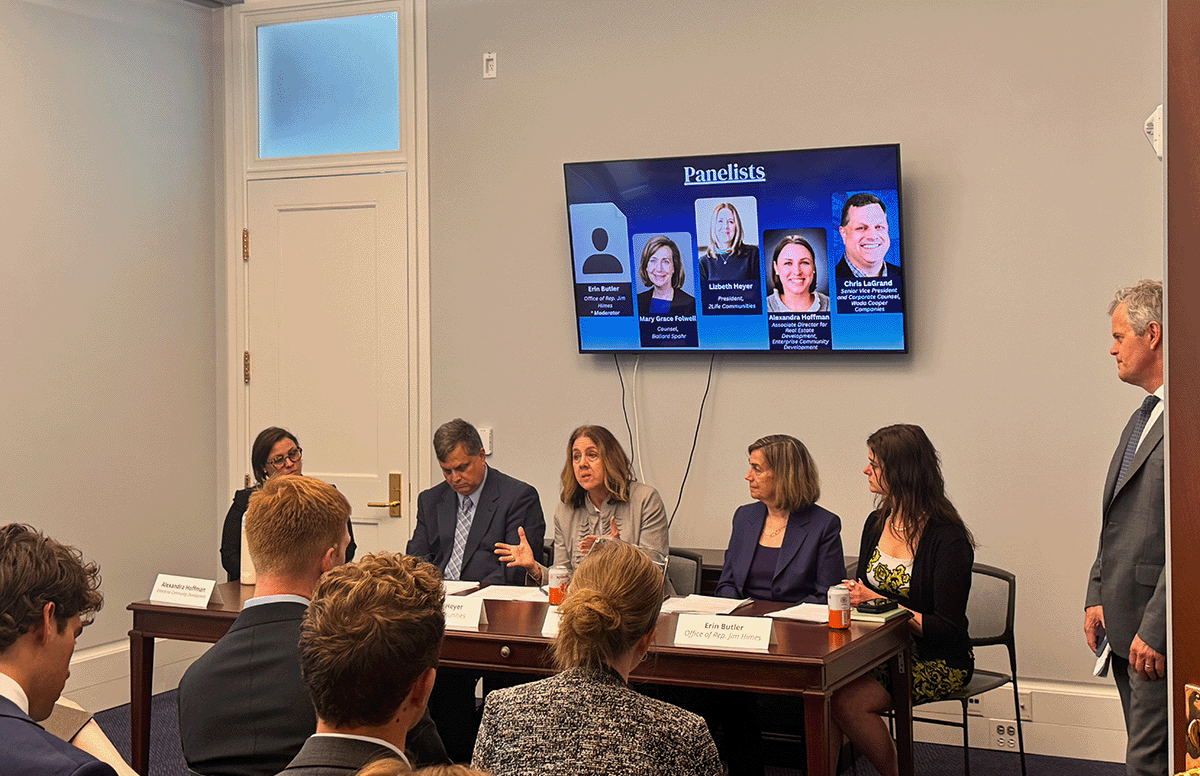
During a briefing on Capitol Hill on June 25, 2026, LeadingAge and other affordable housing groups pushed for an exemption on recent “Build America, Buy America” (BABA) requirements that add time delays and significant cost increases to affordable housing developments.
LeadingAge member 2Life Communities, a non-profit housing provider based in Massachusetts, presented during the briefing about the wide-ranging challenges associated with BABA compliance. While showing renderings of an affordable housing development at risk of stalling due to the domestic sourcing requirement, Lizbeth Heyer, the President of 2Life Communities, told the packed briefing room that because of BABA-related uncertainty, the project has been delayed: “Altogether, BABA has already added more than $1 million in known costs and six months of delay.”
Heyer goes on to stat that the “$1 million [in additional costs] is not an abstract number. It could instead fund approximately three years of health and wellness services that help our residents remain health, independent, and out of hospitals and nursing homes.”

Enacted in 2021, BABA stipulates that federally-funded infrastructure projects utilize domestically-produced materials. The problem? Many home building products are simply not produced in the United States, and requesting a waiver is an uncertain and lengthy process that must be completed for each individual item within each construction project (down to the hinges, gaskets, and appliances).
BABA was originally intended to apply more narrowly to federal infrastructure projects like roads and bridges. LeadingAge has been calling on the White House and HUD to reassess the applicability of BABA for affordable housing projects, including affordable senior housing developments and major rehab funded through the Department of Housing and Urban Development’s (HUD) Section 202 Supportive Housing for the Elderly program. BABA compliance is also triggered by HUD programs like the HOME Investment Partnerships program, as well as Permanent Supportive Housing (PSH), the Green and Resilient Retrofit Program (GRRP), Public Housing, and even Congressionally Directed Spending (also known as congressional earmarks).
LeadingAge co-organized the briefing with the National Housing and Rehabilitation Association (NH&RA) and other housing organizations representing affordable housing providers nationwide. The briefing was sponsored by the bipartisan Congressional Build America Caucus, also known as the “abundance” caucus, which aims to revive American building capacity by speeding up infrastructure, housing, and energy projects.
The briefing showcased various types of housing, including senior and supportive housing, assisted Multifamily and Public Housing, and single family housing. The panel of affordable housing providers each shared the same story: While in the midst of a housing crisis, BABA is making it even harder to build housing that is affordable.
However, the true impacts of BABA are not absorbed by housing providers, but by the residents they serve, including the more than 6,200 older adults on 2Life Communities’ waiting list.
“Strong American manufacturing and affordable housing should reinforce each other – not compete with one another,” said Heyer. She ended with an appeal to Members of Congress: “Give us the certainty we need to get back to what we do best: building the homes – and communities – that America’s seniors deserve.”
LeadingAge will continue to push on Capitol Hill and with HUD and the White House for the necessary policy changes, including a BABA exemption for affordable housing and an improved waiver process.
Most Recommended
 TEP Report Hints At Home Health Value Based Purchasing Potential Changes
Recently Added

October 02, 2026
HUD Begins Scoring NSPIRE Affirmative Requirements

October 01, 2026