Striking the right ratio of operational expenses-to-resident experience is every senior living community leader’s goal. Dining services, where labor costs, food safety, and resident satisfaction intersect, pose unique challenges—and opportunities. Executives from LeadingAge CAST Patrons Ingleside and RiverSpring Living, in a November 2025 Annual Meeting session, shared insights that demonstrate how strategic technology adoption can streamline culinary operations, reduce costs, and free up resources to enhance human interaction, staff satisfaction, and resident engagement. Here’s an overview of the tech solutions that are transforming dining operations.
Remote Temperature Monitoring
Ingleside, which operates multiple life plan communities in the District of Columbia, Virginia, and Maryland region, has implemented fully automated, cloud-based temperature monitoring systems for their refrigeration units to replace the need for manual temperature checks. This fully automated data logging system uses cloud-based monitoring with real-time alerts. Teddy Demessie, senior director of dining services at Ingleside, explained the set-up at the Ingleside King Farm campus: “We have approximately 99 refrigeration units; being able to keep all the data is extremely challenging.” Automated logging saves significant time and, coupled with 24-hour monitoring, “essentially ensures that we’re compliance-ready at all times—any time an inspector comes on and asks for any data set, it’s just a click away. “
Staff use their newly available time on other tasks, including resident-facing ones. For Ingleside, Demessie said, the benefit is “time that we’re able to then utilize and switch over to different resources” to better manage residents and provide a better service.
Digital Inventory and Menu Management
Electronic inventory management systems, such as MenuPilot/DayMark and DateCodeGenie, automate labeling, track ingredient usage, and update recipes in real time. Ingleside’s Demessie emphasized that the technology “enables us to focus on accuracy and consistency.” Eliminating handwritten stickers removes “spelling errors, smudges, inconsistent data format,” and in one click, he said, “allows staff to get the necessary information on a food label.” Digitalized recipes and tablet-based ordering ensure consistency across multiple venues and allow for rapid menu updates. RiverSpring Living’s cloud-based software labeling platform of choice, DateCodeGenie, can store over 10,000 items in its database, says Shane Kuhnen, vice president of dining services. “It prints in real time, keeps up to date with any label and dating,” and, he notes, has an indestructible label.
Table-Side Ordering and Resident Analytics
Table-side ordering with tablets, such as devices from point-of-sale systems firm FullCount, optimizes the flow of orders, reduces wait times, and minimizes errors. “We partnered with [FullCount] on several items and worked together for an extended period of time, making changes to the software,” Demessie said. These systems, he explains, integrate with resident management platforms such as LeadingAge Gold Partner with CAST Focus PointClickCare, which allow servers to access dietary restrictions and preferences instantly. The integration helps to protect residents as they’re traveling through the communities.
Robotics and Automation
Dining robots, such as Bear Robotics and Servi+, automate operations like food delivery and dish bussing. Both Ingleside and RiverSpring Living use robots in their dining services operations. “We’ve had over 10,000 [meal] deliveries with [our] two robots since we started utilizing them,” said Ingleside’s Demessie, adding that residents have “a good time playing around with these robots” and named them Daisy and Bruno.
Operationally, the robots help staffing. Tapping them as additional help in daily meal delivery allows waitstaff to remain on the floor attending to diners, enhancing resident experience. More generally, their impact on dining operations is a plus in areas including food safety and workplace injury—not to mention finance. “Each robot is about $500,” he explains. “The way we utilize it essentially comes up to around $5.20 an hour per robot per month, versus a $18 an hour minimum wage, approximately.”
Communication and Multilingual Support
Loud conversations and other background noises, frequently amplified in large rooms like formal dining areas or other types of communal settings, can present challenges for residents who may be sensitive to sound. To address that concern and help staff who need to share information while on the floor, Relay Pro headsets can alleviate some noise generation and facilitate seamless, quiet communication among team members. “We utilize it in our finer dining experience venues,” said Ingleside’s Demessie. “Relay Pro really enables us to be able to provide that quiet experience while still allowing our team to be able to communicate. It also helps leaders manage across multiple venues.” These devices support real-time translation in over 90 languages, breaking down barriers for multilingual teams.
Learning how successful it has been for Ingleside, RiverSpring Living, which had piloted the same system three to four years ago but chose not to fully adopt the program then, now plans on reviewing to see how Relay Pro can work, not only in food service, but in engineering, human resources, and other departments.
Sustainability and Resident Engagement
Innovations like the Babylon Micro Farm bring sustainable, year-round hydroponic growing to the heart of the community. Residents at RiverSpring Living participate in planting, harvesting, and tasting fresh herbs and greens through the community’s Babylon Micro Farm partnership, now over four years strong. “We actually did a full harvest with residents, memory care, skilled nursing,” says Kuhnen. “The entire process … went from [residents] planting the seeds all the way to watering the product, managing it through the app,” he said. “Residents were really, really engaged,” noting that the community’s dining staff developed a Thai basil lettuce wrap, where all the fresh produce was actually utilized from the farm. “We’re going to continue to use this as a program,” he says, to elevate the dining experience and support wellness.
Project Vetting and Implementation
Both organizations follow disciplined processes for technology adoption: piloting new solutions on a small scale, gathering feedback, and scaling up successful initiatives. “Once we did find success, then we methodized that, and we went through unit by unit, floor by floor, department by department” to implement, explained David Finkelstein, chief information officer at RiverSpring Living and a CAST Commissioner. The other “secret sauce,” he says, is project management. “We learned very early on that you can’t just take technology and train a few people how to use it and hope that it’s going to stick. We hired a clinical project manager, a nurse with IT experience and project management experiences, and she has helped lead the way to be the liaison between IT, finance, operations, nursing, and the residents, in order to make sure that technology is not only utilized, but it’s adopted throughout the organization.”
By testing and then leveraging various technologies, Ingleside and RiverSpring Living are improving workflows and overall experiences. “We learn from our mistakes,” said RiverSpring’s Finkelstein. For them and all providers, once they’ve found their operational sweet spot, these dining technologies, from smart thermometers and digital menus to robotics and sustainability platforms, can yield real benefits. Advantages include reducing costs, improving safety and compliance, and, most importantly, allowing staff to focus on what matters most: building relationships and delivering exceptional dining experiences for every resident. RiverSpring Living’s Kuhane summed it up: “As far as resident and staff satisfaction, there’s nothing better than having person-to-person contact in the dining room.”
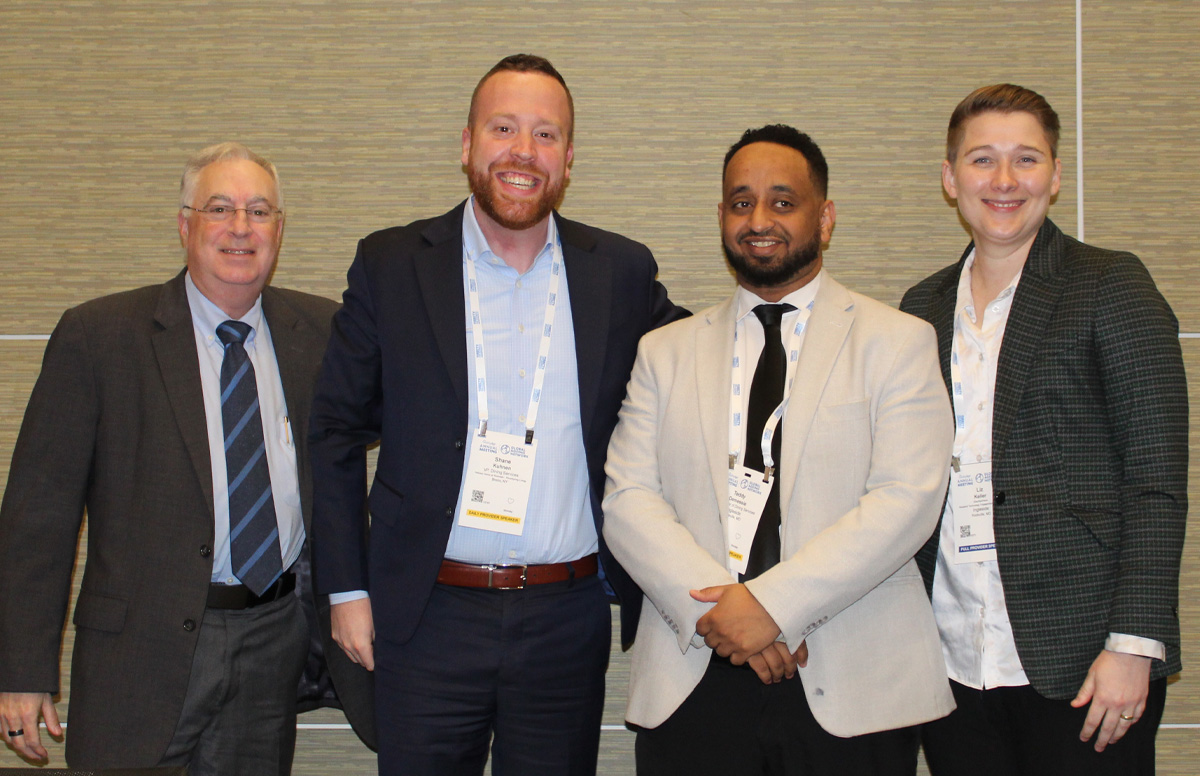
Photo: From left to right, David Finkelstein, Shane Kuhnen, Teddy Demessie, Liz Keller.

 Shutdown Week Three: Impact of Ongoing Closure on Affordable Housing