For older adults, regular exercise is a ubiquitous recommendation from health professionals, who cite the need to maintain cardiovascular health and build muscle mass, fight the biological mechanisms behind age-related conditions, boost immune systems, and increase longevity. And all agree that it’s never too late to start moving.
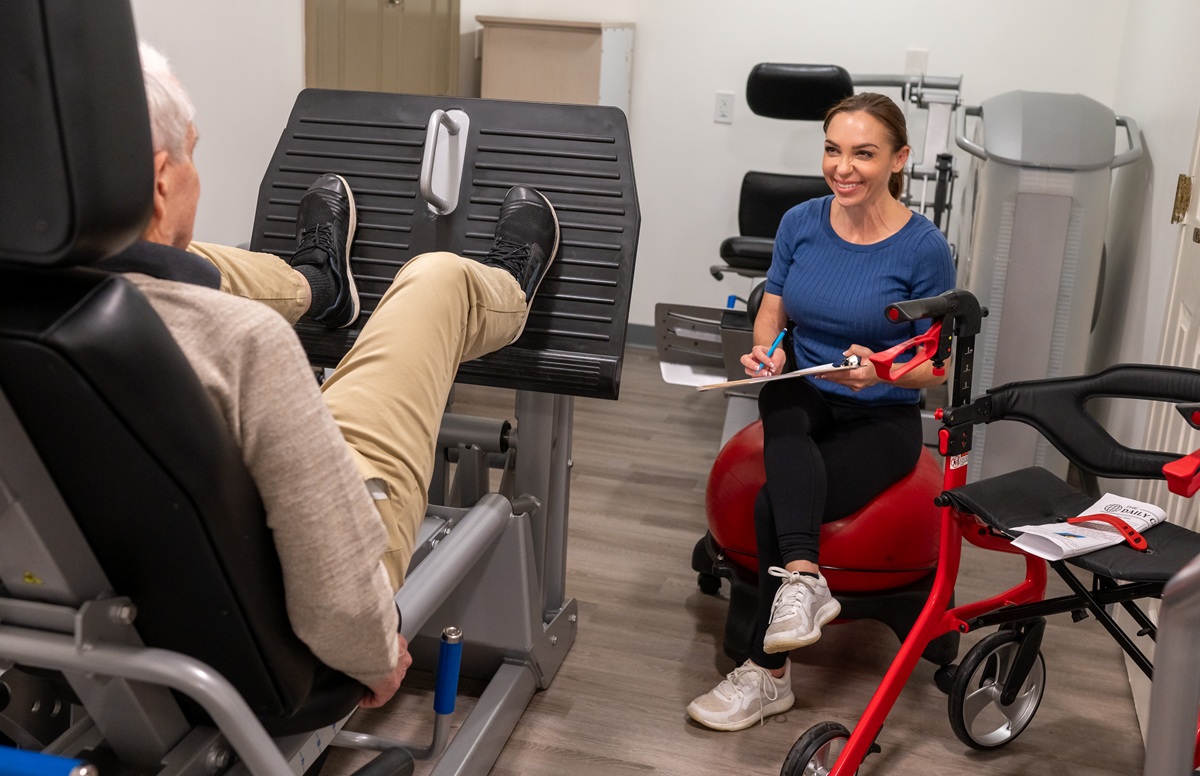
The Fitness First program created by Boston-based LeadingAge member Rogerson Communities puts that advice into action with one-on-one supervised training for the organization’s residents and adult day program participants, helping to improve strength, mobility, balance, and flexibility. The organization, a provider of affordable housing, independent and assisted living, memory care, continuing care retirement communities, and an adult day program, operates five Fitness First centers. Each features exercise equipment designed for older adults—a variety of Nautilus machines, treadmills, NuStep bikes, stationary bikes, dumbbells, Thera-Bands, and exercise rail systems.
The two busiest are at Rogerson’s adult day health program and at Rogerson House, a memory care assisted living community. The other three are at Cooper House and Farnsworth House, both HUD 202 affordable housing communities, and Beacon House, a mixed-income community with some HUD Section 8 units.
Launched with support from grant funding in 2002, Fitness First, which initially opened in Rogerson’s adult day center, has helped residents and adult day clients make big gains in mobility. Rogerson President and CEO Walter Ramos shares two examples: a long-time resident who once required a wheelchair and is now able to walk with one crutch, and an adult day participant with a partially paralyzed arm who regained the ability to raise it thanks to the program.
Participants benefit from the guidance of Rogerson staff, including two Fitness First specialists who are American Council on Exercise (ACE) certified personal trainers experienced in working with older adults, and a Fitness First manager who also has a health sciences degree. These trainers consult with participants, their doctors, and their family members to tailor programs to individual needs, whether recovering from a fall or injury or reaching specific physical goals. Staff also collaborate with outside physical therapists who come on-site to work with their clients among the residents.
Today, more than 20 years since Fitness First’s start, Ramos says Rogerson pays for most of the program, though some grants have helped to offset the cost of physical trainers. He would like to construct additional Fitness First centers, but said it depends on securing more grant funding, and he hopes to see the day that some reimbursement for Fitness First services—from government or health plans—will materialize. Ramos also noted that Fitness First centers are not used for post-acute rehabilitation services, as Rogerson is not a licensed rehabilitation provider.
The adult day program and Rogerson House require that their Fitness First users always be accompanied by staff. The other sites allow independent living residents to use the equipment on their own, though staff trains them in using the equipment and helps develop customized programs.
Nearly 70% of the adult day participants are cleared by their doctors to use Fitness First, though not all of those clients use the center. At the Rogerson House memory care community, 67% of the first-floor residents, who are in earlier stages of Alzheimer’s or dementia, are active participants in Fitness First. (Second-floor residents in that community are in later stages, and their usage of the center is minimal.)
In addition to the physical health benefits, says Ramos, the program boosts spirits and socialization: “People have not only developed a relationship with the trainer, but relationships with the other older adults using Fitness First. As the friendships develop, you see the conversations take place, and they encourage one another.”
A Partnership to Enable Data-Driven Improvements
Fitness First will be the first Rogerson program to benefit from the organization’s new partnership with the UMass Boston Manning College of Nursing & Health Sciences. The initiative has a strong focus on data collection with the goal of improving older adults’ well-being. In August, for instance, a UMass undergrad double-majoring in urban public health and exercise and health sciences gathered data from staff on usage of Fitness First and participant outcomes, to be used to help evaluate its effectiveness. Data collected with surveys and other feedback mechanisms undertaken as part of the Rogerson-UMass partnership will be used to improve housing management and service delivery across all of Rogerson’s programs. The partnership will also create paid internships for UMass students to work at Rogerson, along with one assistantship that would last one to two years.
Ramos believes hard data is a key to aging services’ ability to tell its story. “Weaving [data] into the fabric of what we do will help us do better work and get more financial support,” he said. “And the more data we have to tell our story, the more effective our advocacy is. I look forward to the day when we’re not just storytelling, like I am today, but ‘data-telling,’ intertwined with our stories.”
Photo: A Rogerson House resident works out with guidance from Fitness First Instructor Allison Priore. Courtesy of Rogerson Communities.

 TEP Report Hints At Home Health Value Based Purchasing Potential Changes