CCaH: How the LTSS Center’s Benchmark Survey Informs Programs
It is a reality that 70% of older adults will need long-term care at some point. Another reality? Many members of the demographic don’t believe that statistic applies to them.
Most adults over the age of 50—more than 80%—want to remain in their homes as they age, according to AARP but in spite of their expectations, occasional challenges may leave them needing help. Older adults who have joined a Continuing Care at Home (CCaH) program and have planned ahead will be able to find that help more easily.
For an initial entry fee, plus an ongoing monthly fee, healthy and independent members can remain at home while gaining access to services comparable to what is available to residents of continuing care retirement communities (CCRCs). Services typically range from wellness resources and preventive health maintenance to housekeeping and light home repairs, often eventually moving towards help with transportation, medication, nursing services, and more. Each CCaH member works closely with a care coordinator to determine what types and levels of care they require, now and into the future.
“I always tell [older adults] that 99.5% of you will have an outpatient procedure, a joint replacement procedure, a hospitalization—you are going to need a little bit of care and it’s going to make a huge difference because our CCaH programs can go in right away and provide that oversight and care to help you return to your healthy baseline,” said Amanda Young, director of business development for LeadingAge member Edenwald in Towson, MD.

Increasing public understanding and confidence in CCaH programs is one part of the equation—the other is to encourage growth of CCaH programs by sharing data on their effectiveness with key stakeholders. The LeadingAge LTSS Center @ UMass Boston benchmark survey, now in its third year, is a tool to curate that data. The latest results of the 54-question survey, sent to 38 organizations in 2025, will be presented by Young and Molly Wylie, research associate for LeadingAge LTSS Center@ UMass Boston, at the 2026 LeadingAge Continuing Care at Home Virtual Conference on June 9 and 10.
Determining Data Points
Young has been involved with the benchmark survey from the start; discussions began in 2016-17 when she was a wellness coordinator at Pathstones by Phoebe in Pennsylvania. “We were on a call with seven or eight other programs across the country that were starting CCaH programs around that time and felt it was important to start collecting data and do some kind of benchmarking,” said Young. A list of questions—more than 130—was generated, then pared down over time.
“We focused on benchmarking data points that would be helpful for knowing our demographic so we can target appropriately for marketing efforts, help with learning conversion rates for sales, and help our boards and leadership understand what’s going on in the industry,” said Young.
Wylie became involved with the project in 2024 when LeadingAge was tasked with serving as the neutral third-party house for the survey data. “What I’m responsible for is distributing the survey to providers, then taking the data back,” said Wylie. “Amanda helps with the analysis.”

Understanding CCaH
Erin Strain, executive director of LeadingAge member Givens Choice in Asheville, NC, says the availability of survey data helps educate potential members. “A CCaH program is kind of amorphous. If someone comes in to tour one of our brick-and-mortar campuses, you can show them a house, an apartment. They can see the amenities and visualize themselves there,” she said. “We don’t have that [with CCaH]. We do a lot of storytelling, but at some point, you need to include tangible facts and data.”
“Some people look at CCaH as a stepping stone to assisted living. However, I believe programs are trying to market CCaH as almost preventive,” said Wylie.
Young agreed. “We’ve always been interested in outcomes. [With CCaH], we have this proactive wellness care coordination service that we’ve seen, anecdotally, really can make a difference in the lives of members. So, we benchmark care utilization, which has been significantly low in facility-based care in the years I’ve been doing this.”
She added, “I think now people are really interested in getting more detail on how to show that the intervention of care coordination is impacting that care utilization piece.”
Proactive Step
Strain has seen growing interest in the CCaH model as an alternative to long-term care insurance, which has become more difficult to obtain. CCaH covers the costs of the aforementioned services for members in their homes, and then provides coverage for short or long-term care in an assisted living or nursing facility if needed.
“Our latest two members are 64. They don’t have long-term care insurance but did this instead. They are people who are young and savvy, but they wanted to see data,” said Strain.
According to data from the 2024 LTSS survey, the average age of new members at time of enrollment is 76. Wylie said LeadingAge has convened workgroups with providers about how to establish CCaH as a proactive step for older adults, rather than a reactive one, which could lead members, who are in good health, to join sooner.
Givens Choice denied 18 CCaH applications last year; they maintain a strict cutoff regarding cognitive ability. CCaHs don’t accept individuals with dementia or Alzheimer’s disease. “The people didn’t score high enough on the cognitive screening, and their average age was 72,” Strain said. “Sometimes data can be a reality check.”
“Getting people over that initial ‘I’m not ready yet’ mindset can be hard,” she added. “I tell people that they are going to ‘yet’ themselves into ineligibility—it happens all the time.”
Demographic Diversity
Diversifying CCaH programs can be challenging. According to the 2024 LTSS survey, member demographics are telling: 96% are white and 69% are married. A total of 58% are female and 3% identify as LGBTQ+. One barrier is cost: membership entry fees typically range from $50,000 to $200,000 and monthly fees from $500 to $2000.
“Most of the current member population is affluent,” said Young. “The original thought was that we were going to hit a middle market with this product, but in fact, people in the middle market often can’t afford it.” Right now, median assets for members are typically around $1.7 million, and that number has remained steady for the past five years.
Young said that some CCaH programs have had good success with the LGBTQ+ community by partnering with their local Pride organizations or with SAGE, a national advocacy organization.
How the Data Helped a Newer CCaH Program
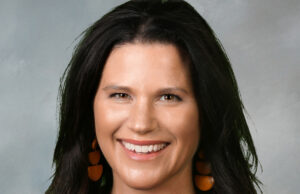
LeadingAge member WesleyLife, based in Des Moines, IA, “is fairly new to the CCaH game,” said Amy Hutchins, chief marketing officer, adding that their program has been in place for approximately two years.
“The first time I was introduced to the benchmark study, it was like Christmas in July,” said Hutchins. “What we didn’t realize was that there’s this much larger community around Community Care at Home and they actually get together, they talk and they share insights and information.” Beneficial learnings from the study, said Hutchins, were topics such as average sales cycle for a CCaH program (according to Amanda Young, this can range from months to years); how sales teams are set up and which organizations, like Wesley Care, have their own home and community-based services, versus those partnering with other organizations.
The benchmarking data has been useful for new CCaH members, too. said Hutchins. “It brings them peace of mind as they are exploring this and trying to understand the program. It helps us to say to them, ‘this might be new to our market, but this is nationwide.’ It’s an extremely purposeful program; we are not building this foundation from scratch, we are learning from others who’ve done it before us.”
To date, WesleyLife has 34 CCaH members with an average age of 68. “Some data that was so helpful to us was that the average number of members is 24, so we feel good about where we are now,” said Hutchins. Their goal is to have 55 members by the end of the year, which Hutchins acknowledges may be “pushing it,” but with their current database of interested parties, she believes they may have the potential to reach that number.
LeadingAge is hosting a CCaH Virtual Conference during the afternoons of June 9 and 10, 2026, to offer actionable strategies, practical insights, and opportunities for peer learning to help organizations build, refine, and sustain successful CCaH programs. Wylie and Young will lead a session on the findings from the 2025 benchmarking survey. Join us!

 TEP Report Hints At Home Health Value Based Purchasing Potential Changes