
LeadingAge Takes Housing to the Hill
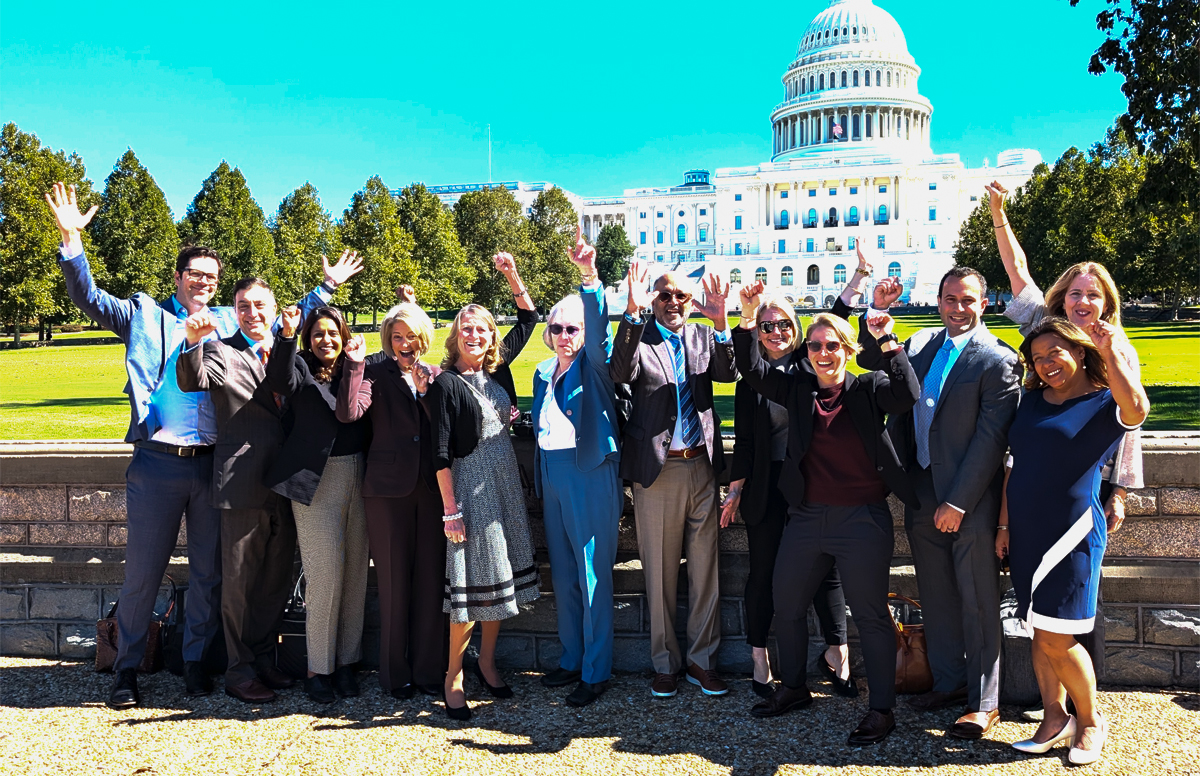
With the debate over federal housing funding and policy heating up ahead of the mid-term elections, LeadingAge national’s affordable housing policy experts and housing provider members from around the U.S. visited congressional offices on October 6, 2026 to elevate and explain affordable senior housing communities’ most pressing issues.
Discussions focused on sharing member experiences with congressional committee staff from both parties, including the House Financial Services Committee and the Senate Committee on Banking, Housing, and Urban Affairs, which oversee policy for federal housing programs, as well as the Senate Committee on Appropriations, which oversees funding for housing programs.
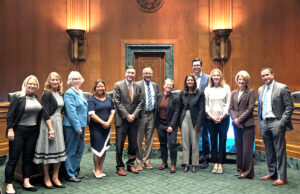
Led by LeadingAge’s housing policy team, the group of ten mission-driven housing organizations also met with the office of Senator Reed (D-RI), a key champion of affordable senior housing programs, and the office of Congresswoman Goodlander (D-NH-02), who helps lead bipartisan efforts to speed up affordable housing production.
Conversations centered on five priorities outlined in LeadingAge’s housing policy agenda: expanding rental assistance for older adults; improving preservation programs for existing affordable senior housing; strengthening development tools to create new units for older adults with low incomes; investing in Service Coordination and place based supportive services throughout affordable senior housing; and modernizing existing programs serving older adults.
The group of advocates represented housing communities from Massachusetts to Ohio to California, through both large and small housing portfolios. Over several hours in both the House and Senate, LeadingAge members described their experience with federal housing programs, including the importance of the Department of Housing and Urban Development’s (HUD) Section 202 Supportive Housing for the Elderly program; their challenges with infeasible domestic procurement requirements through the Build America, Buy America (BABA) Act; and such ongoing concerns as the need for greater rental assistance funding and how Section 202 can be most effectively combined with the Low-Income Housing Tax Credit (LIHTC).
Throughout the meetings, Lizbeth Heyer, CEO of 2Life Communities serving more than 2,000 older adults throughout Massachusetts, framed the conversation for congressional staff by detailing rent burdens throughout various types of housing available to older adults. LIHTC-financed housing units, she explained, unless paired with a federal subsidy, are only moderately affordable, compared to the rents in units financed through HUD’s Section 202 program. The latter, are truly deeply affordable housing.
Similarly, Courtney Nuzzo and Rose Risley of the Lewinsville Retirement Residence, serving more than 100 extremely low income older adults in a wealthy neighborhood of northern Virginia, shared stories of their residents, some of whom couch surfed for years before a unit opened up on the Lewinsville’s years-long waitlist; Stacey Phelps with CSI Support and Development, which operates cooperatively managed affordable senior housing communities across four states, chimed in to emphasize the need for service-enriched housing through HUD’s Service Coordination program, which has long been underfunded.
Building on the resident stories, leaders from HumanGood, National Church Residences, and AHEPA Senior Living—housing and services organizations with nationwide portfolios—then told of the impact that the lack of federal investment and increased uncertainty is having on their development and rehabilitation pipelines.

Together, they painted the picture of stalled projects due to a loss of federal seed money in senior housing capital, and they detailed multi-million dollar delays in housing development after spending months sourcing made-in-America door hardware due to new BABA requirements.
John Ardovini, of LeadingAge business member Hampden Park Capital and Consulting, which works with non-profit housers on accessing capital and navigating HUD transactions, drove the point home: “We need to invest in and improve federal housing policies and programs to make it easier, not harder, to build and preserve affordable senior housing communities.”
The congressional staff appeared deeply engaged in conversations of members’ experiences; many asked detailed follow-up questions and requested input on potential solutions, including legislative approaches championed by LeadingAge.
The meetings underscored the value of member participation in federal advocacy. Collaborative efforts like these visits are vital to our work on the Hill because they help elected officials understand the real-life impact of policy. Throughout the meetings, LeadingAge members centered the mission of aging in community with dignity. “The crisis of tomorrow is here,” emphasized 2Life Communities’ Heyer.
But being in D.C. is not the only avenue for engagement: members can also take action to urge Congress to enact full funding for housing programs serving older adults in fiscal year 2027, and get connected with LeadingAge’s work on affordable housing for older adults.
Most Recommended
Recently Added

October 09, 2026
 Analysis: House Energy and Commerce 14-Bill Medicaid Fraud Package


October 07, 2026
Bill to Help Immigrants Enter Health Care Careers Reintroduced
October 06, 2026